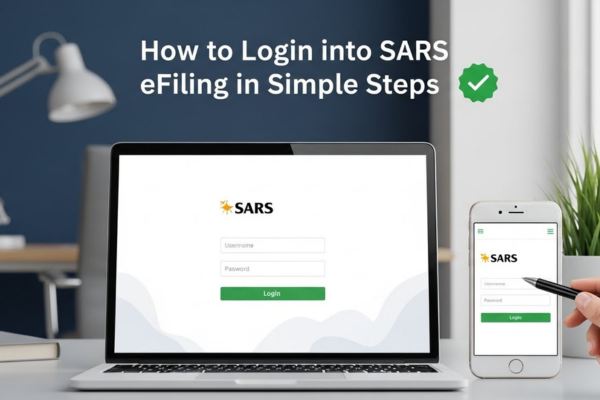
How to login into SARS eFiling in simple steps
Accessing your digital tax profile should be both secure and efficient.
Choose one option to continue:
🎓 Get SARS Certificate On eFiling ⚠️ If I Owe SARS Money Help 📂 List For SARS Tax ReturnBecause the platform manages sensitive financial and personal information, its login process is more complex than standard online services such as email or social media accounts.
Multiple security layers are in place to prevent unauthorised access, which can occasionally result in login errors if system requirements are not met.
This guide provides a structured walkthrough of the access process, explaining how to prepare your digital environment, complete authentication successfully, and resolve the most common login issues.
Phase 1: Preparing Your Digital Environment
Before entering your login details, it is important to ensure that your device and browser are compatible with the platform’s security framework.
1. Browser Compatibility and Cache Management
The portal performs best when accessed through updated versions of commonly supported browsers such as Google Chrome, Microsoft Edge, or Safari. Older browser versions may struggle to load authentication components correctly.
Before logging in, clear your browser’s cache and cookies. Stored data from previous sessions can interfere with authentication and may cause errors such as “Session Expired” or incomplete page loading.
Additionally, ensure that pop-ups are enabled for the official site. Some authentication steps open in secondary windows, and blocked pop-ups can prevent the login process from completing.
2. Secure Internet Connection
Always use a private and secure internet connection when accessing your tax profile. Public or shared Wi-Fi networks often trigger security warnings, as they increase the risk of unauthorised access.
Using a trusted connection reduces the likelihood of automated security blocks and helps ensure that authentication requests are processed without interruption.
Phase 2: Completing the Authentication Sequence
Once your environment is prepared, follow the login sequence exactly as designed by the system.
3. Username Validation
Navigate to the official eFiling landing page and select the “Login” option.
Enter your registered username and continue. The system verifies the username before requesting a password. This step is intentional and helps prevent automated login attempts and credential misuse.
If the username is not recognised, do not proceed repeatedly. Instead, confirm that you are using the correct credentials or initiate the username recovery process.
4. Password Entry
After the username is validated, you will be prompted to enter your password. Passwords are case-sensitive, so accuracy is essential.
If you enter an incorrect password multiple times, the system may temporarily suspend access for security reasons. If you are unsure of your password, use the “Forgot Password” function rather than attempting repeated entries.
Phase 3: Multi-Factor Authentication (MFA)
Multi-factor authentication is a mandatory security step and one of the most common points where users experience difficulty.
5. Receiving the One-Time Pin (OTP)
After submitting your password, you must select how you want to receive your One-Time Pin. Options typically include email, SMS, or a mobile application notification.
Mobile app notifications are generally the fastest and most reliable method. SMS delivery may be delayed due to network congestion, especially during peak periods.
Ensure that your contact details are up to date, as OTPs are sent only to registered channels.
6. Entering the OTP
Enter the six-digit OTP exactly as received. These codes are time-sensitive and usually expire within a few minutes.
If the code does not arrive immediately, wait at least 60 seconds before requesting a new one. Sending multiple requests in quick succession can invalidate earlier codes and cause further delays.
Phase 4: Resolving Common Login Issues
If an error occurs after OTP submission, it is often related to session management rather than incorrect credentials.
7. “User Already Logged In” Error
This message usually appears when a previous session was closed without properly logging out. The system may still consider that session active.
To resolve this, wait approximately 15 minutes for the session to expire automatically or log in using a private or incognito browser window.
8. Inactive Profile Status
If you have not accessed your profile for an extended period, it may be marked as inactive for security purposes. In this case, you will be prompted to re-activate your profile by confirming your identity using registered personal and contact details.
Summary
Successful access to your eFiling profile depends on preparation, accuracy, and patience. By using a compatible browser, maintaining secure connection settings, and following the authentication sequence carefully, most login issues can be avoided.
Consistent and secure access allows you to focus on managing your tax obligations efficiently, without unnecessary delays or account restrictions.