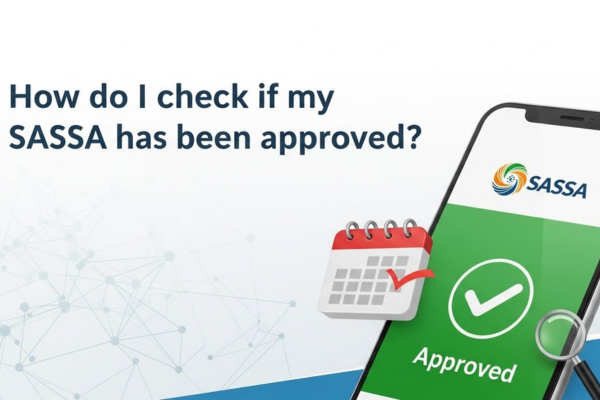
How do I check if my SASSA has been approved?
For many, the grant represents a critical component of their monthly budget, making the verification process a high-priority task.
Choose one option to continue:
💰 Release Your Locked Funds 📱 Update Your Contact Info 📉 View The Income LimitsHowever, the system is not merely a “check-and-receive” interface; it is a sophisticated network that interacts with revenue services, home affairs, and banking institutions.
To manage your expectations and navigate this bureaucracy effectively, you must move beyond simple guesswork. This guide provides an extensive, step-by-step breakdown of how to interface with the agency’s official channels, interpret the data provided, and resolve common bottlenecks that can delay your approval.
Phase 1: Pre-Verification Preparation
Before attempting to check your status, it is important to understand that the system requires absolute data integrity. Even a minor discrepancy can result in a “Record Not Found” error. Expertise in this area begins with preparation.
Essential Information Required:
- National Identification Number: Your unique 13-digit identification number.
- Verified Mobile Number: The specific SIM card number used during your initial registration.
- Stable Connection: Ensure you are using a secure internet connection or have sufficient mobile signal for USSD requests.
Note on Data Privacy: The agency will never ask for your banking PIN, passwords, or full CVV numbers through these status check channels. If a platform requests this information, it is likely a fraudulent site.
Phase 2: Method 1 – Utilizing the Official Web Portal
The web portal is the most robust method for status verification. It provides the most detailed information, including a historical log of all previous months and the specific reasons for any delays or rejections.
Step-by-Step Execution:
- Navigate to the Source: Open your web browser and enter the official URL for the Social Relief of Distress (SRD) management system.
- Locate the Inquiry Section: Scroll down the homepage until you reach the section specifically titled “Application Status.”
- Data Input: Enter your 13-digit ID number into the first box. In the second box, enter the mobile number linked to your application.
- Initiating the Search: Click the “Submit” button. At this stage, the website queries the backend database to pull your specific file.
- Navigating the Dashboard: Once the page loads, you will see a list of months. Click on the drop-down arrow for the current month to see the detailed status.
If the portal is slow to load, it is often due to high traffic volumes during the first week of the month. In such cases, the system may experience “Time-Out” errors. It is recommended to try again during off-peak hours, such as late evening or early morning.
Phase 3: Method 2 – The Automated Messaging Protocol (WhatsApp)
For those who prefer a mobile-first approach without navigating a full website, the agency’s automated messaging bot offers a streamlined text-based interface.
Step-by-Step Execution:
- Contact Initialization: Save the agency’s verified official number (ending in 8553) to your smartphone’s contact list.
- Trigger the Bot: Open the messaging application and send a single word: “Status.”
- Identity Verification: The bot will respond with an automated prompt asking for your ID number. Type it carefully and send it.
- Confirm the Profile: The system will ask you to confirm if the ID belongs to you. Once confirmed, it will provide a summary of your latest status.
- Requesting Detail: Some versions of the bot allow you to ask for “More Info,” which will provide the specific reason if your status is currently “Pending” or “Declined.”
Phase 4: Method 3 – The Offline USSD System
Recognizing the need for accessibility in areas with limited internet infrastructure, the agency maintains a USSD (Unstructured Supplementary Service Data) system. This method is highly reliable as it operates on the GSM signaling channel, which is often available even when data services are down.
Step-by-Step Execution:
- Dialing the Gateway: Open your phone’s dialer and enter the official USSD string (e.g.,
*120*3227#or the specific code provided by the region). - Menu Navigation: A text menu will appear on your screen. Select the option that corresponds to “Check Status” by typing the number indicated and pressing “Send.”
- ID Validation: Follow the prompt to enter your 13-digit ID number.
- Review the Flash Message: A summary of your status will appear on your screen as a temporary message. In most cases, a follow-up SMS will also be sent to your inbox for your records.
Phase 5: Interpreting the Status Codes (Decoding the Database)
A successful status check will result in one of several codes. Understanding these is where true Expertise is required.
- Approved: The agency has verified your eligibility for the month. You have passed the means test, and your income is below the R624 threshold.
- Pending: This is the most common status. It indicates that the agency is still waiting for confirmation from external partners like the Revenue Service or the Department of Home Affairs.
- Declined: The system has identified a disqualifying factor. Common reasons include “Alternative Income Source Identified” or “Debtor,” which means you owe money to a government fund (like the UIF).
- Referred: This means your application has been flagged for further verification, often due to a suspected duplicate ID or a conflict in the banking details provided.
Phase 6: Troubleshooting and Resolution
If you have followed the steps above and still cannot find your status, there are three primary technical reasons why this occurs:
- Database Synchronization: If you have recently updated your banking details, the system may take up to 48 hours to synchronize the new data with your status check profile. During this window, you may receive a “General Error” message.
- Mobile Number Mismatches: If you use a different SIM card to check your status than the one used to apply, the security protocol will block the request. You must ensure the numbers match exactly.
- Browser Cache Issues: When using the web portal, old data stored in your browser’s cache can interfere with new results. Clear your browser history or use an “Incognito/Private” tab for a cleaner query.
Conclusion: Active Stewardship of Your Grant
Monitoring your grant status is an ongoing responsibility. By using these technical pathways, you move from a position of uncertainty to one of informed action. Whether you use the web portal for detail, the messaging bot for convenience, or the USSD code for offline access, the goal remains the same: ensuring your application is moving correctly through the administrative pipeline.
The system is designed to be fair and automated. By providing accurate data and checking your status through official channels, you are ensuring that your eligibility is recognized and that you are prepared for when your funds are disbursed.