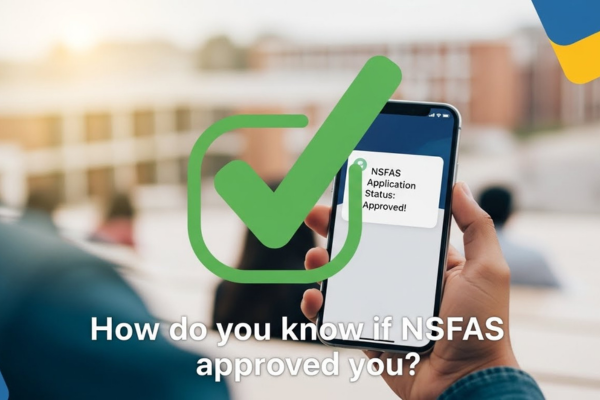
How do you know if NSFAS approved you?
Determining the outcome of a funding request requires navigating the official communication infrastructure of the National Student Financial Aid Scheme (NSFAS).
Approval is not an instantaneous event; rather, it is the culmination of a multi-stage verification process that cross-references academic, financial, and civil data.
Applicants must rely on official digital platforms to confirm their status, as these records serve as the definitive legal basis for institutional registration, accommodation placement, and the disbursement of monthly allowances.
Relying on unofficial third-party reports can lead to significant administrative errors.
Step 1: Systematic Monitoring of the myNSFAS Student Portal
The primary and most authoritative method for verifying an approval is through the myNSFAS portal. This centralized dashboard reflects real-time updates as the application progresses through the internal verification hierarchy.
To conduct a status check, applicants should follow this protocol:
- Navigate to the official NSFAS website.
- Securely log in using the registered username and password credentials.
- Locate and select the “Track Funding Progress” tab.
The portal uses specific status indicators that applicants must interpret correctly. A status of “Provisionally Funded” or “Funding Eligible” indicates that the financial and socioeconomic criteria have been successfully verified against external databases like SARS and the Department of Social Development.
However, it is critical to understand that approval is only finalized once the student is officially registered at a public university or TVET college and the institution confirms this enrollment to the scheme.
Step 2: Interpreting Automated SMS and Email Correspondence
The scheme utilizes automated messaging gateways to notify applicants of significant changes in their application lifecycle. These notifications are pushed to the specific cellphone number and email address provided during the initial registration phase.
- Approval SMS: A formal text message is typically broadcast once the final internal funding decision is reached. This message often contains a summary of the next steps required.
- Official Email Confirmation: A comprehensive correspondence is sent, outlining the formal terms of the bursary. This document is essential for students who may need to prove their funding status to private landlords or institutional bursars before the final data integration is complete.
Note: If an applicant changes their contact details without updating their myNSFAS profile, they will fail to receive these critical alerts. Maintaining current contact records is a mandatory requirement for all bursary recipients to ensure the continuity of communication.
Step 3: Utilizing WhatsApp and USSD Low-Data Channels
Recognizing that many students may have limited access to high-speed data or the full web portal, NSFAS provides alternative digital channels to verify approval status. These tools offer a simplified, text-based summary of the application’s current standing.
- Official WhatsApp Channel: By adding the verified NSFAS WhatsApp number (+27 78 519 7006) and following the automated prompts, students can receive a status update directly on their mobile device. This channel is particularly useful for quick checks on “Action Required” flags.
- USSD Service Code: Dialing *120*67327# allows for a status check without requiring a smartphone or any internet connectivity. This is often the most accessible method for students in rural areas or those experiencing connectivity issues.
Step 4: Institutional Data Integration and Funding Lists
Once the scheme approves an applicant, the relevant data is shared with the financial aid offices of all 26 public universities and 50 TVET colleges.
During the formal registration period, institutions receive “Funding Lists” containing the names and ID numbers of all students whose bursaries have been provisionally confirmed.
This data integration is what allows students to register without paying an upfront registration fee.
If the student portal reflects an approved status, but the institution’s internal system does not, the student should present their Application Reference Number to the campus financial aid office. This allows a manual verification against the latest government data exports.
Step 5: Understanding the “Funding Eligible” Final Gate
It is vital to distinguish between being “eligible for funding” and having “active funding.” Approval is a two-part administrative gate:
- Socioeconomic Approval: The scheme confirms the applicant meets the financial threshold and citizenship requirements.
- Registration Confirmation: The public institution confirms the student is enrolled in a valid, N+1 compliant qualification.
The status will only transition to a final “Active” or “Paid” state once the institution submits the registration data back to the scheme’s servers.
Regular monitoring during the first month of the academic semester is necessary to ensure this data exchange occurs without technical friction. Failure to verify this final step can lead to delays in the disbursement of personal care and accommodation allowances.